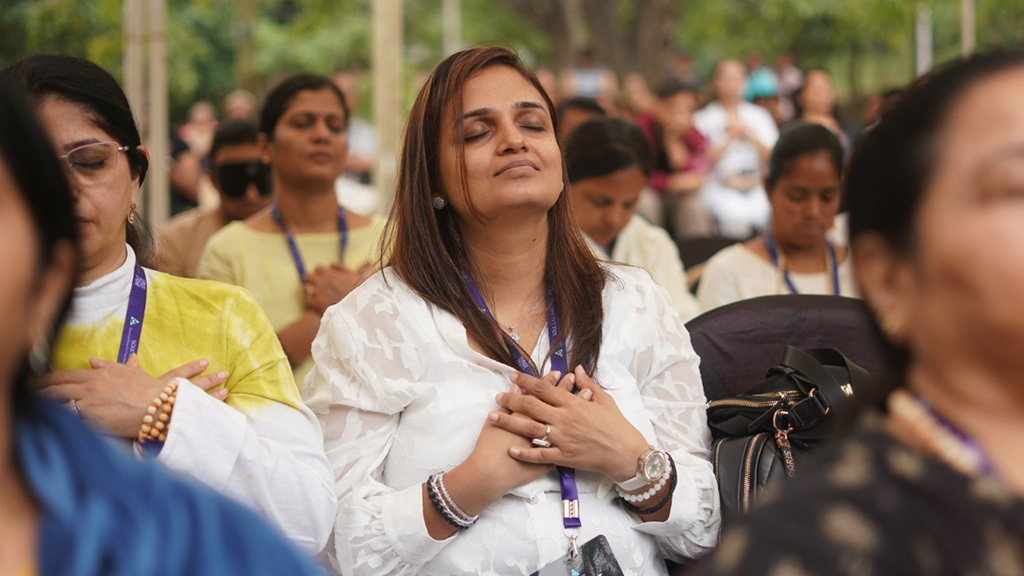
Breathing Exercises for Anxiety: Your Natural Guide to Calm & Stress Relief
Your breath is one of the most powerful tools to manage stress and anxiety naturally.
Yet most of us never think about it. We breathe around 20,000 times a day — mostly on autopilot — completely unaware that each inhale and exhale holds the key to resetting our nervous system. When anxiety strikes, your breathing becomes shallow and rapid, sending distress signals to your brain.
In this guide, you’ll discover the best breathing exercises for anxiety, how they work scientifically, and how to practice them daily for lasting calm.
By integrating breathwork, visualization, and specific yoga poses, chakra balancing enhances mindfulness, fosters emotional stability, and encourages spiritual growth. Whether you seek clarity, confidence, or inner peace, this practice empowers you to reconnect with your true self and live in harmony with your energy
Why Breathing Exercises Work for Anxiety
Before diving into techniques, it helps to understand why breathing is so effective.
When you’re anxious or stressed, your body activates the sympathetic nervous system — the “fight or flight” response. Your heart rate spikes, your muscles tense, and your breath becomes fast and shallow. This is an evolutionary survival mechanism, but in modern life, it gets triggered far too often — during work deadlines, difficult conversations, or even scrolling through the news.
Controlled breathing exercises activate the parasympathetic nervous system — your body’s “rest and digest” mode. This slows your heart rate, lowers blood pressure, reduces cortisol (the stress hormone), and signals your brain that you are safe. Studies published in journals like Frontiers in Human Neuroscience have confirmed that slow, deep breathing can significantly reduce anxiety, improve emotional regulation, and even enhance focus.
6 Powerful Breathing Exercises for Anxiety
- Diaphragmatic Breathing (Belly Breathing)
This is the foundation of all breathing exercises for anxiety. Most people breathe from their chest when they’re stressed — diaphragmatic breathing shifts the breath deep into the belly, triggering immediate relaxation.
How to practice:
- Sit or lie down in a comfortable position.
- Place one hand on your chest and one on your belly.
- Inhale slowly through your nose for 4 counts, letting your belly rise (your chest should stay relatively still).
- Exhale gently through your mouth for 6 counts, letting your belly fall.
- Repeat for 5–10 minutes.
Best for: Everyday stress, beginners, and those new to breathwork.
- Box Breathing (4-4-4-4)
Used by Navy SEALs and high-performance athletes, box breathing is one of the most effective breathing techniques for anxiety and acute stress. Its structured rhythm gives your mind something to focus on, instantly interrupting anxious thought loops.
How to practice:
- Inhale through your nose for 4 counts.
- Hold your breath for 4 counts.
- Exhale through your mouth for 4 counts.
- Hold for 4 counts.
- Repeat 4–6 cycles.
Best for: Panic attacks, high-pressure moments, pre-meeting nerves, or sleeplessness.
- 4-7-8 Breathing
Developed by Dr. Andrew Weil, the 4-7-8 technique is one of the most recommended breathing exercises for stress and anxiety. The extended exhale is key — it actively engages your vagus nerve, which plays a central role in calming the nervous system.
How to practice:
- Inhale quietly through your nose for 4 counts.
- Hold your breath for 7 counts.
- Exhale completely through your mouth (making a whoosh sound) for 8 counts.
- This is one breath cycle. Repeat 3–4 times.
Best for: Anxiety before sleep, emotional overwhelm, and winding down at night.
- Alternate Nostril Breathing (Nadi Shodhana)
Rooted in yogic tradition, alternate nostril breathing is a powerful technique to balance the left and right hemispheres of the brain, reduce anxiety, and promote mental clarity. Research suggests it can lower heart rate and improve cardiovascular function.
How to practice:
- Sit comfortably with your spine tall.
- Use your right thumb to close your right nostril. Inhale through the left for 4 counts.
- Close both nostrils, hold for 2 counts.
- Release your right nostril and exhale for 4 counts.
- Inhale through the right nostril for 4 counts.
- Close both, hold for 2 counts.
- Exhale through the left nostril.
- This completes one cycle. Repeat 5–10 times.
Best for: Mental fog, emotional imbalance, and pre-meditation calm.
- Resonance Breathing (Coherent Breathing)
Resonance breathing, also called coherent breathing, involves breathing at a rate of approximately 5–6 breaths per minute — far slower than our average of 12–20. This rhythm synchronizes your heart rate variability (HRV) and has been shown in clinical studies to significantly reduce symptoms of anxiety and depression.
How to practice:
- Inhale for 5 counts.
- Exhale for 5 counts.
- Continue for 10–20 minutes without pausing.
Best for: Long-term anxiety management, depression support, and building resilience.
- Pursed Lip Breathing
Simple but incredibly effective, pursed lip breathing slows your breath pace naturally and increases oxygen exchange – great for those moments when anxiety makes you feel breathless or lightheaded.
How to practice:
- Relax your shoulders and neck.
- Inhale slowly through your nose for 2 counts.
- Pucker your lips as if you’re about to whistle.
- Exhale slowly through pursed lips for 4 counts.
- Repeat 4–5 times.
Best for: Shortness of breath, panic, or physical anxiety symptoms.
How to Build a Daily Breathing Practice
The real power of breathing exercises for anxiety comes from consistency. A single session can bring immediate relief, but a daily practice rewires your nervous system over time, making you more resilient to stress.
Here’s how to make it stick:
- Start small. Even 5 minutes a day is enough to begin with. You don’t need a perfect setup — a quiet corner, a chair, or even your car works.
- Anchor it to a routine. Practice right after waking up, before lunch, or just before bed. Tying breathwork to an existing habit makes it easier to maintain.
- Use reminders. Set a gentle alarm or use a breathwork app to prompt your sessions, especially in the first few weeks.
- Track your mood. Keep a short journal noting your anxiety levels before and after each session. Seeing progress is incredibly motivating.
- Be patient. The benefits of breathwork compound over time. Most people notice a meaningful shift in anxiety levels within 2–4 weeks of daily practice.
Signs Your Breathwork Is Working
Many people wonder whether they’re doing breathing exercises correctly. Here are signs that your practice is having a positive effect:
- You feel noticeably calmer within 2–5 minutes of starting.
- Anxious thoughts feel less “sticky” or overwhelming.
- Your sleep quality improves.
- You instinctively take deeper breaths during stressful moments.
- Your overall baseline anxiety decreases over weeks.
If you’re not feeling a shift, experiment with different techniques. Not every method works the same for everyone — the best breathing exercise for anxiety is the one you’ll actually practice.
When to Seek Additional Support
Breathing exercises are a powerful tool, but they work best as part of a holistic approach to mental wellness. If your anxiety is persistent, interfering with daily life, or accompanied by physical symptoms, please consult a qualified mental health professional or physician.
Breathwork is complementary – not a replacement for professional support.
Conclusion
Start Your Breathwork Journey Today
You’ve just discovered six of the most effective breathing exercises for anxiety and stress relief. Each technique is free, accessible, and backed by science. The only thing standing between you and a calmer mind is practice.
Ready to Transform the Way You Handle Stress?
Join our Breathwork Workshop and learn directly from certified breathwork facilitators. In this immersive session, you’ll experience guided breathing techniques, understand the science of your nervous system, and build a personalized daily practice — all in a supportive community environment.
Join Workshop – Limited spots available. Reserve yours today and take the first step toward a calmer, more centered you.