

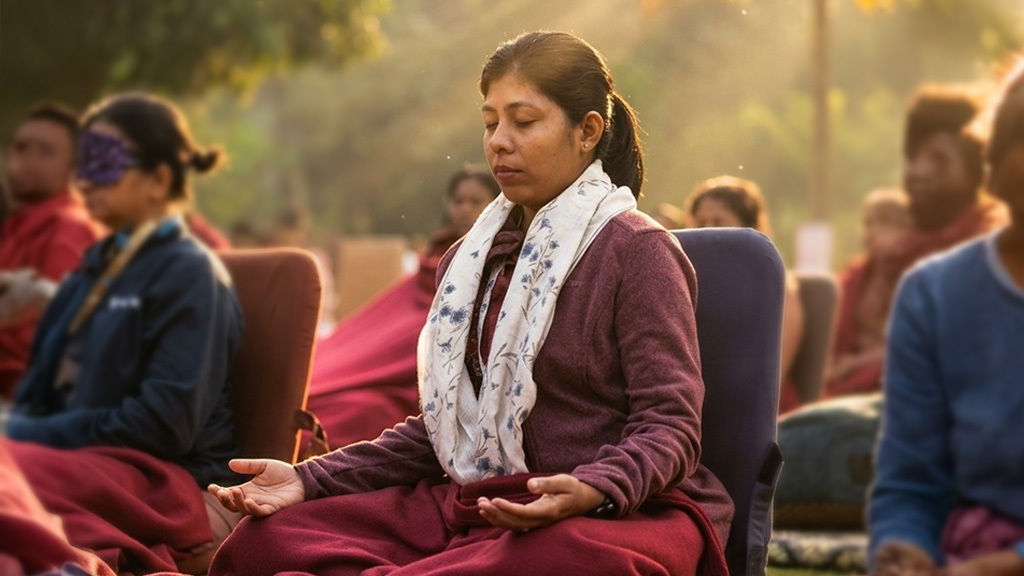
Meditation is often seen as sitting quietly with your eyes closed—but what actually happens during meditation?
For many beginners, meditation can feel confusing. You may wonder:
- Am I doing it right?
- Why do thoughts keep coming?
- What should I feel?
The truth is, Meditation is a simple yet powerful practice that works on your mind, body, and emotions in ways you may not immediately notice.
In this blog, we will explore what truly happens during meditation and how it can transform your inner world.
What is Meditation?
Meditation is the practice of focusing your attention and becoming aware of the present moment.
It is not about stopping your thoughts completely—it is about:
- Observing your thoughts
- Letting them pass without judgment
- Bringing your focus back to your breath or awareness
Over time, this practice creates calmness, clarity, and emotional balance.
What Happens in Your Mind During Meditation?
- Your Mind Starts Slowing Down
At the beginning, your mind may feel busy. Thoughts come and go quickly.
But as you continue practicing Meditation, your thoughts begin to slow down.
You move from constant thinking to a more relaxed and peaceful state.
- You Become Aware of Your Thoughts
During meditation, you start noticing your thoughts instead of reacting to them.
You may observe:
- Random memories
- Daily worries
- Emotions
- Future concerns
Instead of getting involved, you simply watch them.
This awareness is one of the most important benefits of Meditation.
- You Experience Moments of Stillness
As your practice deepens, you may experience small moments where:
- Thoughts pause
- The mind feels quiet
- You feel deeply calm
These moments of stillness bring inner peace and relaxation.
What Happens in Your Body During Meditation?
- Your Body Relaxes
When you sit for Meditation, your body begins to relax naturally.
- Muscles loosen
- Breathing slows down
- Heart rate becomes steady
This physical relaxation reduces stress and tension.
- Your Breathing Becomes Deep and Calm
Your breath plays a key role in meditation.
During the practice:
- Breathing becomes slower
- Oxygen flow improves
- The body feels lighter
This helps calm your nervous system and reduce anxiety.
- Stress Hormones Reduce
Meditation activates the relaxation response in your body.
This reduces stress hormones like cortisol, leading to:
- Lower anxiety
- Better emotional balance
- Improved overall health
What Happens Emotionally During Meditation?
- You Release Stored Emotions
Many emotions remain unprocessed in daily life.
During Meditation, these emotions may come to the surface.
You might feel:
- Sadness
- Anger
- Fear
This is normal—it is part of emotional healing.
As you continue, these emotions begin to release naturally.
- You Feel Calm and Balanced
After meditation, many people feel:
- Peaceful
- Light
- Relaxed
This emotional balance improves your daily life and relationships.
- You Build Emotional Strength
Meditation helps you respond to situations calmly instead of reacting impulsively.
You become more patient, aware, and emotionally strong.
What Happens Spiritually During Meditation?
Meditation is not only mental and physical—it also creates a deeper connection within.
You may experience:
- A sense of inner peace
- Connection with yourself
- Clarity about life
This inner awareness helps you grow as a person.
How Long Does It Take to See Results?
One common question is: “When will I see results from Meditation?”
The answer is simple:
- Immediately: You may feel relaxed after one session
- In a few days: You notice reduced stress
- In weeks: Improved focus and emotional balance
- Long-term: Deep transformation and inner peace
Consistency is the key.
Common Experiences During Meditation
Everyone’s experience with Meditation is different, but some common things include:
- Wandering thoughts
- Feeling sleepy
- Feeling restless
- Experiencing calmness
- Emotional release
All of these are normal. There is no “perfect” meditation experience.
Tips for Better Meditation Practice
- Start with 5–10 minutes daily
- Sit comfortably in a quiet place
- Focus on your breath
- Don’t try to control your thoughts
- Be patient and consistent
Remember, meditation is a journey, not a destination.
Why Meditation is Important in Today’s Life
In today’s fast and stressful world, Meditation helps you:
- Reduce stress and anxiety
- Improve focus and productivity
- Sleep better
- Build emotional balance
- Stay present and mindful
It is one of the simplest ways to take care of your mental health.
Conclusion
So, what happens during meditation? Your mind slows down, your body relaxes, your emotions heal, and your awareness grows.
Meditation is not about perfection—it is about presence. Even a few minutes daily can bring powerful changes in your life. If you are ready to experience guided meditation and learn the right techniques from experts, take the next step in your journey.
Join Shreans Daga Foundation and discover how meditation can bring peace, clarity, and transformation into your life.